
China Top Sustainable Energy Solutions Suppliers?
China has become a major source of sustainable energy solutions, spanning solar modules, wind turbines, battery storage, smart grids, and energy management software. Its suppliers serve factories, commercial buildings, utilities, and remote communities across global markets. Yet choosing a reliable partner requires more than comparing prices or production capacity.
Fatih Birol, Executive Director of the International Energy Agency, observed, “The clean energy economy is emerging faster than many people think.” His statement reflects China’s rapidly expanding clean technology sector. However, growth alone does not prove quality. Serious buyers should examine supplier experience, product testing, warranty terms, financial stability, and after-sales support. Relevant certifications, transparent factory audits, and documented performance data also matter.
Details reveal the difference. A strong supplier can explain battery degradation after repeated charging, inverter efficiency during heatwaves, and maintenance needs in dusty regions. It should also provide lifecycle information, recycling plans, and realistic delivery schedules. These practical signals often matter more than impressive website claims.
No supplier is perfect.
Some manufacturers publish limited data about supply-chain emissions or long-term component reliability. That gap deserves careful questioning. The leading Chinese sustainable energy solutions suppliers are not simply the largest exporters. They are companies that combine engineering capability, responsible production, responsive service, and measurable results. This guide examines those qualities while recognizing that supplier rankings can change with technology, regulation, and market conditions. Careful verification remains essential.
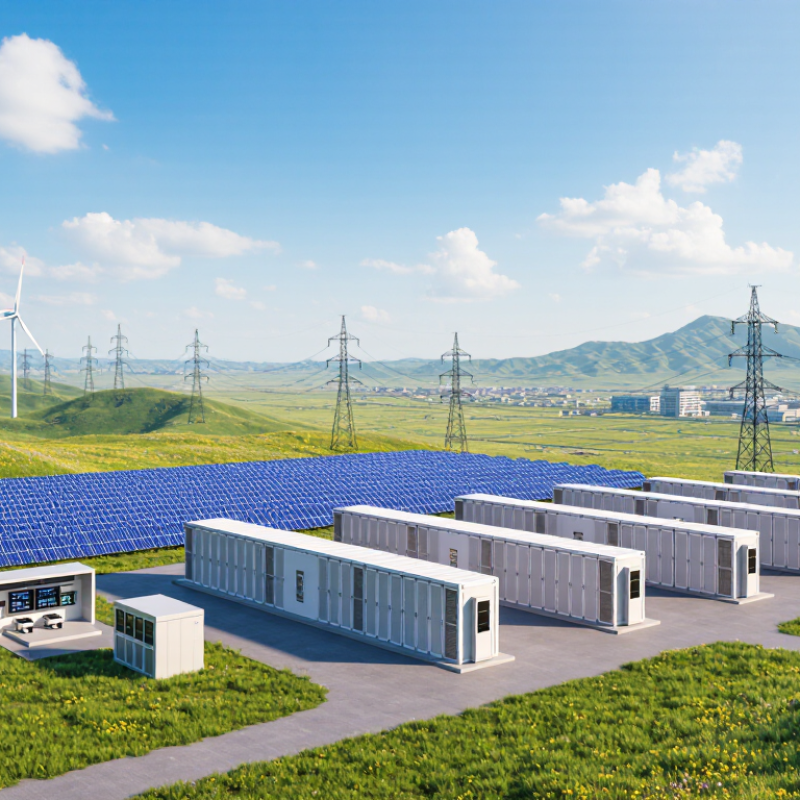
What Defines a Sustainable Energy Solutions Supplier in China?
What Defines a Sustainable Energy Solutions Supplier in China?
China’s renewable market demands more than low prices and fast delivery. IRENA recorded 297.6 GW of new renewable capacity in China during 2023. The scale is impressive. It also increases pressure on suppliers to prove environmental claims with measurable evidence.
A credible supplier should disclose product energy efficiency, carbon data, material origins, and expected service life. Independent testing should support degradation rates and safety performance. For a solar project, buyers need clear power curves, temperature coefficients, factory inspection records, and recycling arrangements. For storage systems, thermal safety testing, cycle-life data, and battery traceability are essential. A 25-year warranty alone proves little.
Site reality matters. Suppliers should understand China’s regional weather, grid requirements, transport conditions, and maintenance access. The IEA’s Renewables 2024 report expects China to contribute almost 60% of global renewable capacity expansion through 2030. This growth makes local engineering experience valuable, but scale can hide weaknesses. Some suppliers still publish incomplete lifecycle data or rely on broad sustainability language. Buyers should request verified emissions figures, worker-safety policies, after-sales response times, and evidence from comparable projects. No supplier is flawless. A reliable partner admits data gaps and shows how they will be corrected.
China Top Sustainable Energy Solutions Suppliers? - What Defines a Sustainable Energy Solutions Supplier in China?
A practical, brand-neutral evaluation framework for identifying sustainable energy solution suppliers in China through measurable environmental, technical, compliance, and supply-chain criteria.
| Evaluation Category | Key Dimension | What a Sustainable Supplier Should Demonstrate | Priority | |
|---|---|---|---|---|
| Energy Source | Renewable energy contribution | Clearly disclose the percentage of electricity or installed capacity derived from solar, wind, hydropower, biomass, or other recognized renewable sources. Renewable claims should be supported by traceable energy accounting. | Energy-source breakdown, electricity certificates where applicable, project records, and third-party verification. | Critical |
| Carbon Management | Greenhouse-gas accounting | Maintain a documented inventory of Scope 1 and Scope 2 emissions and progressively improve measurement of relevant Scope 3 categories. Emissions should be reported using recognized GHG accounting principles. | Annual emissions inventory, calculation methodology, organizational boundary, reduction targets, and assurance statement. | Critical |
| Carbon Management | Decarbonization targets | Set time-bound, measurable emissions-reduction targets supported by an implementation plan, rather than relying only on carbon offsets or general environmental statements. | Baseline year, target year, interim milestones, energy-efficiency projects, renewable procurement plan, and progress reports. | High |
| Product Performance | Lifecycle energy efficiency | Provide verified efficiency data for the complete operating range, including conversion losses, standby consumption, degradation, expected service life, and operating conditions. | Laboratory test reports, technical datasheets, performance curves, warranty conditions, and lifecycle assessment results. | Critical |
| Solar Solutions | Module or system durability | Demonstrate performance retention, environmental resistance, and safety under relevant temperature, humidity, wind, snow, corrosion, and ultraviolet exposure conditions. | Independent test results, applicable conformity certificates, degradation data, quality-control records, and product warranty terms. | High |
| Energy Storage | Battery safety and lifecycle | Disclose usable energy, round-trip efficiency, cycle-life test conditions, thermal-management design, fire-protection measures, and end-of-life handling procedures. | Safety test reports, battery management specifications, emergency response procedures, recycling or take-back arrangements, and degradation assumptions. | Critical |
| Grid Integration | Grid compatibility and flexibility | Support applicable grid-connection requirements, power-quality control, forecasting, demand response, fault ride-through, and safe interaction with distributed-energy systems. | Grid-connection studies, control-system documentation, protection settings, commissioning records, and local utility approval where required. | High |
| Circular Economy | Material efficiency and recyclability | Reduce material intensity, identify restricted substances, design for repair or replacement where feasible, and provide a documented route for recycling or responsible disposal. | Bill of materials, restricted-substance declarations, recycled-content information, repair manuals, and recycling-partner documentation. | High |
| Supply Chain | Traceability of critical materials | Maintain traceability for critical minerals, electronic components, and high-risk materials, with procedures addressing forced labor, illegal sourcing, and environmental harm. | Supplier code of conduct, risk assessments, supplier audits, origin records, corrective-action reports, and grievance channels. | Critical |
| Compliance | Chinese regulatory conformity | Meet applicable Chinese requirements for product safety, environmental protection, energy conservation, construction, electrical installation, and grid connection according to the project type. | Conformity declarations, inspection reports, permits, applicable national or industry standard references, and project acceptance records. | Critical |
| Quality Management | Manufacturing consistency | Operate documented quality-control processes covering incoming materials, production, final inspection, traceability, nonconformance management, and corrective actions. | Quality-management certification, process-control plans, sample inspection records, serial-number traceability, and failure-rate statistics. | High |
| Transparency | Public sustainability reporting | Publish consistent, comparable information on energy use, emissions, water, waste, labor practices, safety incidents, and progress against sustainability targets. | Sustainability report, environmental data boundary, reporting methodology, assurance level, and historical performance trends. | High |
| Project Economics | Total cost of ownership | Evaluate capital cost, installation, energy yield, maintenance, replacement, degradation, financing, insurance, disposal, and expected operating life instead of comparing purchase price alone. | Lifecycle-cost model, yield assumptions, maintenance schedule, spare-parts policy, service-level agreement, and sensitivity analysis. | High |
| Local Delivery | Installation and after-sales capability | Provide qualified commissioning, remote monitoring, preventive maintenance, spare-parts support, response-time commitments, and local technical training. | Service network structure, technician qualifications, response-time agreement, training records, monitoring screenshots, and maintenance reports. | High |
| Social Responsibility | Worker health, safety, and labor standards | Implement occupational-health and safety controls, lawful working-hour practices, worker training, incident reporting, and a prohibition on forced and child labor. | Safety-management procedures, injury statistics, training records, labor-policy documents, audit results, and remediation records. | Critical |
| Data Security | Digital monitoring and cybersecurity | Protect operational data, access credentials, remote-control functions, and personal information through role-based access, logging, backup, incident response, and secure updates. | Cybersecurity policy, system architecture, access-control matrix, vulnerability-management process, backup plan, and incident-response procedure. | High |
| Independent Verification | Third-party testing and assurance | Use competent independent laboratories or assurance providers for material product claims, environmental data, safety performance, and lifecycle assessments. | Laboratory accreditation details, test scope, report date, sampling method, certificate validity, and assurance statement. | High |
Related Posts
-
Top Renewable Energy Solutions for 2026 to Watch Out For?
-
Top 10 Smart Energy Solutions for Global Buyers?
-
How to Ensure Safe Power Distribution in Global Sourcing?
-

Best Electrical Installation Ideas for Home and Office?
-

Top 10 Electrical Wiring Solutions for Global Buyers?
-
7 Best Outdoor Electrical Solutions for Global Buyers?