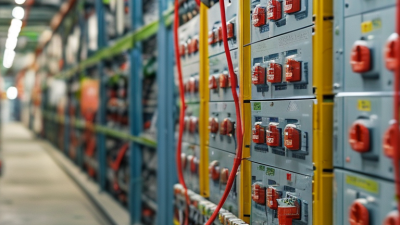
Global sourcing can reduce costs, but it can also expose buyers to inconsistent electrical practices. Safe power distribution requires more than selecting a low-priced supplier. It demands verified designs, qualified manufacturers, documented testing, and clear installation controls. Electrical safety educator Mike Holt often emphasizes, “Electricity is always looking for a path to ground.” That simple warning remains relevant across factories, warehouses, and international projects.
A reliable sourcing process should examine switchboards, circuit protection, grounding systems, surge protection, cable ratings, and enclosure quality. Buyers should request test reports, factory inspection records, material certificates, and traceable serial numbers. Standards such as IEC 61439 and IEC 60364 can support technical evaluation, but local requirements still need review by qualified professionals. Certification marks alone may not reveal poor assembly, damaged terminals, or unsuitable operating conditions. Inspect the details.
Practical checks matter. Look for loose wiring, missing labels, overheated connection points, and blocked ventilation around distribution equipment. Confirm that suppliers control design changes and subcontracted production. Ask how they handle nonconforming components. Ask again.
Many global sourcing teams rely too heavily on paperwork. That is a weakness worth admitting. A perfect document package cannot compensate for careless installation or weak maintenance. Supplier audits, witnessed testing, and site acceptance checks create stronger evidence. Records should remain accessible throughout the equipment’s service life. When experience, technical judgment, and independent verification work together, safe power distribution becomes a managed process rather than a hopeful assumption. Still, every project deserves a fresh risk review. Conditions change. Mistakes happen. The responsible response is to detect them early.
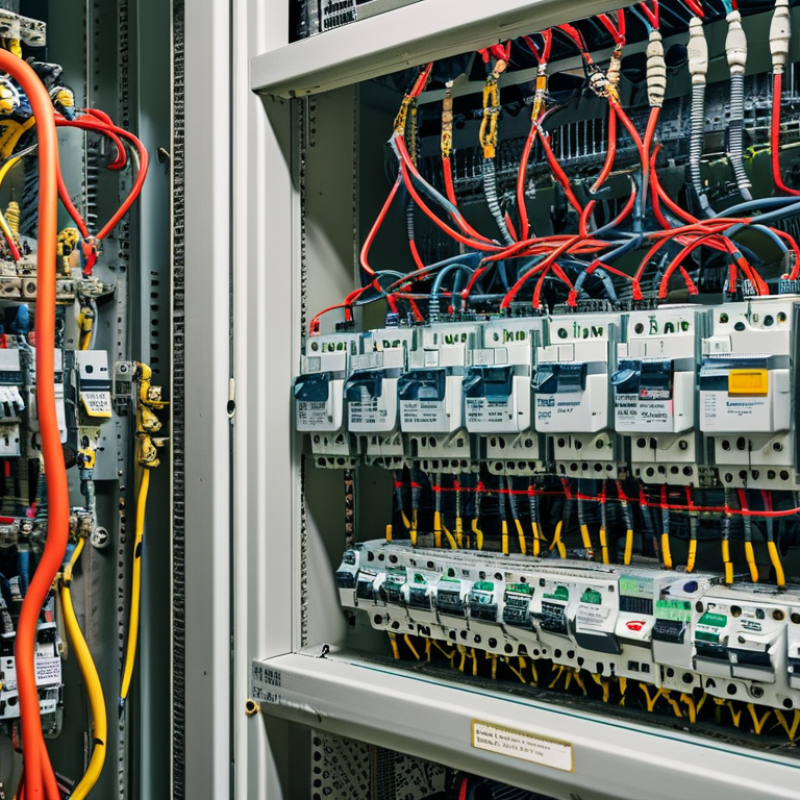
Defining power distribution requirements across global markets starts with the site, not the product catalogue. Specify voltage, frequency, phase configuration, grounding, socket type, protection, and enclosure rating for every destination. Climate matters too. A warehouse in a humid coastal zone needs different corrosion protection than a dry inland facility. IEC 60364 provides a useful framework for low-voltage installations, but local electrical codes still control final acceptance.
Demand is becoming less predictable. The International Energy Agency’s Electricity 2024 report forecasts global electricity demand growth of about 4% annually from 2024 to 2026. Renewable Energy Statistics 2024 from IRENA reports 473 gigawatts of renewable capacity added in 2023.
This growth can increase voltage variation, harmonics, and switching events in some networks. Sourcing teams should therefore define surge protection, power-quality limits, short-circuit ratings, testing methods, and spare-part requirements before supplier selection.
A spreadsheet can look complete and still miss a critical grounding detail. That mistake is expensive.
Tips: Build a country-by-country requirements matrix. Ask suppliers for test reports, wiring diagrams, and compliance evidence. Include local engineers in design reviews. Confirm installation conditions with photographs, not assumptions. Recheck requirements after pilot deployment; field feedback may expose weaknesses that laboratory tests missed.
Safe power distribution begins with the destination market, not the factory catalog. Check nominal voltage, frequency, plug configuration, grounding, and allowable leakage current. A 230-volt product can require different protection when shipped to a 120-volt region. Ask for current test reports, technical files, wiring diagrams, and declarations of conformity. Do not rely on a supplier’s statement alone. Short sentence.
Regulatory duties depend on product type, installation environment, and importer responsibility. Industrial equipment may need machinery, electromagnetic compatibility, low-voltage, or energy-efficiency assessments. Household products often require safety testing, warning labels, local-language instructions, and traceable markings. Confirm whether certification is mandatory before customs clearance or only before market placement. This distinction matters. A qualified laboratory should match the test scope to the exact model and intended use. Copied reports can hide differences in insulation, fuses, or cable dimensions.
During a sourcing review, I compare the certificate number with the product label and purchase specification. I also inspect sample units, terminal blocks, earth connections, and strain reliefs. One overlooked detail can invalidate an otherwise convincing compliance package. My process is not flawless. A spreadsheet once carried an outdated voltage value, and the error survived one review. Now, I require a second-person check and written approval before production. Keep certificates, revision histories, inspection photos, and corrective actions together. That record supports audits and makes future sourcing decisions less uncertain.
How to Ensure Safe Power Distribution in Global Sourcing?
Safe global sourcing starts with evidence, not attractive specifications. Require equipment certificates, factory test records, and clear installation instructions. Verify voltage, frequency, short-circuit ratings, ingress protection, and temperature limits for each destination. IEC 61439 provides important requirements for low-voltage switchgear assemblies. Treat it as a baseline, not a complete safety guarantee. Supplier audits should review calibration records, traceability, change control, and worker training. A polished factory can still have weak protection practices.
Tips: Ask for independent test reports. Check certificate numbers directly. Inspect one finished unit before shipment. Compare protective-device settings with the actual load. Keep translated wiring diagrams inside the control cabinet. Do not accept copied documents. Small omissions become expensive.
Protection systems deserve equal attention. Coordinate circuit breakers, fuses, residual-current devices, grounding, and surge protection across the complete network. A device may meet its rating but fail coordination during a fault. Uptime Institute’s 2024 Annual Outage Analysis reported that 54% of surveyed outages cost more than $100,000, while 16% exceeded $1 million. That evidence supports stronger verification before installation. My experience suggests sourcing teams often check compliance once, then ignore later design changes. That is a mistake. Re-test modified assemblies and record every approval. Review emergency isolation points with local technicians. If workers cannot identify the isolation switch quickly, the system is not ready.
| Sourcing Dimension | Verified Requirement or Fact | Recommended Evidence | Acceptance Criteria | Main Risk Controlled |
|---|---|---|---|---|
| Electrical compatibility | Confirm the destination country’s nominal voltage, frequency, earthing arrangement, plug configuration, and protective-device requirements before purchase. Common low-voltage supply systems include approximately 230 V at 50 Hz and approximately 120 V at 60 Hz, but local systems must be verified for each installation. | Destination-country electrical specifications, utility connection data, equipment nameplate, wiring diagram, and installation manual. | Equipment ratings match the actual supply voltage and frequency; connectors and earthing provisions are suitable for the installation. | Overheating, incorrect operation, electric shock, and equipment damage. |
| Applicable installation standard | IEC 60364 provides requirements for low-voltage electrical installations, including protection against electric shock, overcurrent, thermal effects, and voltage disturbances. | Design calculations, single-line diagrams, inspection records, and a compliance statement identifying the applicable national adoption of the standard. | The design identifies circuit protection, conductor sizing, earthing, isolation, and verification tests required for the destination location. | Unsafe installation design and non-acceptance by local inspectors or authorities. |
| Overcurrent protection | Circuit-breaker performance should be selected according to the connected load, conductor ampacity, prospective short-circuit current, and coordination requirements. IEC 60947-2 covers circuit-breakers for low-voltage switchgear and controlgear. | Protection coordination study, breaker data sheet, rated current, short-circuit breaking capacity, and trip-curve information. | The interrupting rating is not lower than the calculated prospective short-circuit current; protection settings are documented and sealed where required. | Fire, conductor damage, arc faults, and failure to clear short circuits. |
| Residual-current protection | Residual-current devices can provide additional protection against electric shock and leakage currents. The required residual operating current and device type depend on the circuit, equipment, and local rules. | RCD selection schedule, test-button records, trip-time test results, and installation inspection report. | The device type, rated residual current, and disconnection time are appropriate for the application and verified during commissioning. | Electric shock and undetected insulation leakage. |
| Surge protection | IEC 61643-11 covers surge protective devices connected to low-voltage power systems. Surge protection should be coordinated with the installation’s earthing system, upstream protection, and exposure to transient overvoltages. | Surge risk assessment, SPD technical data, maximum continuous operating voltage, discharge-current rating, backup protection, and wiring layout. | The SPD is correctly rated for the system voltage and earthing arrangement, installed with short conductors, and has a visible status or maintenance indication where applicable. | Damage caused by lightning-induced or switching transients. |
| Enclosure protection | IEC 60529 defines IP-code classifications for protection against access to hazardous parts and ingress of solid foreign objects and water. The required IP rating depends on the installation environment. | Environmental assessment, enclosure test documentation, IP marking, gasket inspection, and installation photographs. | The enclosure’s IP rating is equal to or higher than the environmental requirement, with cable entries maintaining the stated protection level. | Moisture ingress, contamination, corrosion, and accidental contact with live parts. |
| Thermal and load capacity | Conductor and busbar capacity must account for continuous load, ambient temperature, grouping, installation method, harmonics, and ventilation. Continuous loading should not exceed the applicable design current and thermal limits. | Load schedule, cable calculations, temperature-rise test data, derating factors, and thermal inspection records. | Calculated current, protection settings, conductor capacity, and enclosure heat dissipation are consistent and documented. | Overheating, nuisance trips, insulation ageing, and fire. |
| Supplier qualification | A qualified supplier should demonstrate controlled manufacturing, traceability, change management, product testing, and the ability to provide consistent technical documentation. | Quality-management certificate, factory audit report, process-control plan, calibration records, nonconformance history, and reference projects. | Critical components and production processes are traceable; corrective actions are documented and independently verified. | Counterfeit parts, inconsistent batches, undocumented design changes, and quality escapes. |
| Product conformity | Conformity markings or declarations should correspond to the exact model, rating, configuration, and applicable legislation. A marking alone is not a substitute for technical verification. | Declaration of conformity, test reports from a competent laboratory, construction file, bill of materials, and product identification records. | Documents are current, model-specific, internally consistent, and cover the supplied configuration and destination market. | Regulatory noncompliance and unsuitable or falsely documented equipment. |
| Factory acceptance testing | Power-distribution assemblies should be inspected and tested before shipment. Typical checks include wiring continuity, protective-circuit continuity, insulation resistance where applicable, functional operation, labeling, and mechanical integrity. | Approved inspection and test plan, signed test records, calibrated instruments, photographs, and deviation log. | All mandatory tests pass; deviations are closed or formally accepted before release. | Wiring errors, loose connections, defective protection, and commissioning delays. |
| Site commissioning | IEC 61557 specifies requirements for measuring and monitoring equipment used in testing the safety of low-voltage distribution systems. Site verification should be completed after installation and before energization. | Earth-continuity results, insulation-resistance results, polarity checks, RCD tests, loop-impedance results where applicable, and functional test reports. | Measurements meet the applicable design and local regulatory limits, and results are linked to circuit identifiers. | Hidden installation defects and unsafe energization. |
| Documentation and maintenance | Safe operation requires current single-line diagrams, circuit schedules, protection settings, spare-parts information, inspection intervals, and procedures for isolation and lockout. | As-built drawings, operation and maintenance manual, training records, preventive-maintenance plan, and revision-controlled files. | Documentation matches the installed equipment and is available to authorized operators and maintenance personnel. | Improper maintenance, incorrect isolation, extended downtime, and repeat failures. |
Note: Final requirements must be confirmed against the destination country’s laws, electrical codes, utility rules, and the specific installation environment.
Safe power distribution begins with evidence, not assumptions.
A supplier’s installation should be tested before energization and after significant changes. IEC 60364-6 recommends verification through inspection, testing, and reporting. Useful checks include protective-conductor continuity, insulation resistance, polarity, residual-current-device operation, and phase sequence. Thermal imaging under normal load can reveal loose terminals that visual inspections miss.
The risk is measurable. The Electrical Safety Foundation International recorded 126 workplace electrical fatalities and 2,930 nonfatal electrical injuries in the United States during 2020. Global sourcing adds uncertainty because installers, languages, and local practices differ.
A credible acceptance file should include calibrated instrument records, test results, circuit schedules, protective-device settings, installation photographs, and signed corrective actions. NFPA 70B also emphasizes documented electrical maintenance programs, reinforcing the value of traceable records.
Tips: Request a factory acceptance test and a site acceptance test. Compare both reports. Confirm instrument calibration dates. Label every distribution board clearly. Keep photographs before covers are closed. Do not guess. One weak point remains common: teams may test a system once, then ignore later modifications. That habit needs reflection. A small added circuit can change fault levels, loading, and protection performance. Re-test after changes, record deviations honestly, and obtain approval from a qualified electrical professional. A complete document trail helps buyers challenge unclear claims and helps technicians work safely months later.
Monitor operations, maintenance, and emergency response procedures as one connected safety system.
Global sourcing often involves unfamiliar facilities, different grid conditions, and uneven maintenance records. The International Energy Agency’s Electricity 2024 report expects global electricity demand to grow by about 4% in 2024. Higher demand increases pressure on transformers, switchgear, and backup systems.
Use live monitoring for load levels, voltage changes, temperature, and insulation warnings. Record readings at fixed intervals, not only after a failure. A thermal scan can reveal a loose connection before a cabinet becomes dangerously hot. The U.S. Bureau of Labor Statistics recorded 145 workplace deaths involving exposure to electricity in 2022. That figure is a reminder that routine inspection cannot be treated as paperwork.
Maintenance plans should follow equipment condition, manufacturer limits, and local electrical requirements. Inspect cable joints, protective devices, grounding paths, and emergency generators. Keep clear labels near isolation points. During an incident, operators need one escalation chart, tested communication channels, and a safe shutdown sequence. Practice with realistic faults, including night shifts and language barriers. Drills can expose gaps.
Some procedures will still fail under pressure. Review them honestly after every alarm, near miss, or delayed repair. NFPA 70B emphasizes documented electrical maintenance, yet documentation alone does not prove safe work. Managers should compare records with field conditions, interview technicians, and correct weak assumptions before the next shipment or production cycle.