801-613-2759 sale@jfitzelectrical.com

Top L6e Quadricycle WVTA Certified Germany Suppliers?

Choosing an L6e quadricycle supplier in Germany requires more than comparing prices and advertised range. Buyers need evidence that each vehicle matches its approved configuration, safety equipment, and operating limits. The phrase L6e Quadricycle Wvta Certified Germany can guide research, but it should never replace document checks.

A reliable supplier should provide clear WVTA references, technical specifications, and traceable manufacturing information. Ask for the certificate number, approval scope, conformity documentation, and the exact model variant covered. Check whether the approval applies to the complete vehicle, not only its components. Battery capacity, charging equipment, speed limitation, lighting, braking, and seat-belt systems deserve careful review. Small details matter.

Real experience also means examining support after delivery. A serious German supplier should explain spare-part availability, software updates, warranty handling, and service locations. Visit a showroom or request a practical demonstration when possible. Listen for unusual drivetrain noise. Inspect panel alignment. Test the charging connection in realistic conditions. Marketing photographs cannot reveal everything.

Regulatory interpretation can change.

For that reason, buyers should confirm current requirements with the relevant approval authority or an independent compliance specialist. Supplier websites may contain outdated claims, translated errors, or incomplete certification details. That weakness is easy to overlook. A balanced comparison should consider engineering quality, production consistency, documentation, delivery reliability, and customer feedback. This guide focuses on those practical signals, helping readers identify credible German suppliers without treating certification as an automatic guarantee of long-term performance.
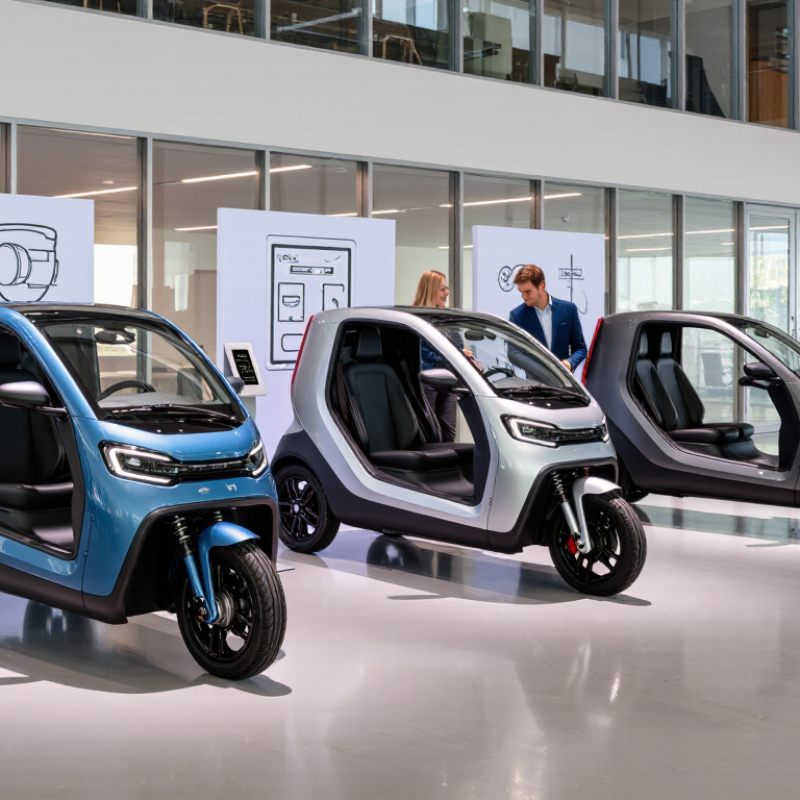
Top L6e Quadricycle WVTA Certified Germany Suppliers?

L6e Quadricycle Standards: 45 km/h, 6 kW, and 425 kg Limits

Top L6e Quadricycle WVTA Certified Germany Suppliers?

For German L6e quadricycle sourcing, the numbers matter more than polished brochures. Regulation (EU) No 168/2013 defines the main limits. A heavy L6e quadricycle generally stays within 45 km/h, 6 kW maximum continuous power, and 425 kg mass excluding batteries. The battery exclusion is easy to misunderstand. Confirm the declared mass basis in the approval documents.

The European Commission’s 2024 automotive industry report highlights growing interest in compact, efficient urban mobility. ACEA’s Vehicles on European Roads 2024 report records an average EU passenger-car age of 12.5 years in 2022. That aging fleet creates space for smaller vehicles, but it does not prove every supplier’s compliance.

Ask German suppliers for the complete WVTA approval number, Certificate of Conformity, test records, and production-control evidence. Check whether the approval covers the exact battery, motor, braking system, and body configuration. A changed battery can affect mass and safety testing. Small details matter.

Look beyond the certificate.

A supplier may advertise “WVTA ready” rather than WVTA certified. Those terms are not equivalent. Independent technical-service verification is useful, especially when importing vehicles into another European market.

I would also inspect charging protection

lighting placement

tyre markings

and actual speed-limiting performance.

Some specifications appear clear until measured on a loaded vehicle. That is where assumptions become expensive.

WVTA Requirements Under EU Regulation 168/2013 for German Suppliers

For German suppliers of L6e quadricycles, Whole Vehicle Type Approval is governed by EU Regulation 168/2013. The vehicle must match its L6e classification, including speed, mass, power, and technical configuration limits. Electric models need careful battery and charging documentation.

The approval authority reviews a complete technical file. It normally includes drawings, system descriptions, test reports, risk information, and production-control procedures.

Braking performance, lighting, electromagnetic compatibility, steering, tyres, mirrors, and occupant protection require attention. A designated technical service performs the relevant tests. The German approval authority may then issue the WVTA, often through the national type-approval process.

The paperwork must remain consistent.

After approval, suppliers must support Conformity of Production. Every manufactured vehicle should match the approved type, not only the prototype tested in a laboratory. The supplier also provides a Certificate of Conformity for each vehicle.

German market operators should keep traceable records for components, software versions, batteries, and corrective actions.

In practice, the process is rarely perfectly linear. A small wiring change can trigger another EMC review, while an underestimated component weight may affect the vehicle category. Experienced teams check requirements early, but even careful files sometimes need revision after technical-service feedback.

Germany’s Leading L6e Suppliers: Models, Production, and Certification Scope

Germany’s L6e suppliers serve a practical urban market. Their main models include enclosed two-seat microcars, compact cargo vehicles, and battery-electric city quadricycles. Most target short commutes, narrow streets, and limited parking spaces.

Production methods differ between suppliers. Some build body panels, interiors, and battery systems locally. Others combine German engineering with components from approved European or international partners. This distinction matters when buyers assess traceability, repair support, and delivery consistency.

A factory visit can reveal more than a polished brochure. Look for documented assembly stages, torque records, battery checks, and final inspection areas.

WVTA certification confirms that an approved vehicle type meets applicable European requirements. For an L6e vehicle, the scope may cover dimensions, mass, speed limitation, braking, lighting, electrical safety, and occupant protection. It may also include battery systems and electromagnetic compatibility, depending on the vehicle design. Suppliers should provide the approval number, variant details, and conformity documentation. Production must then remain consistent with the approved type through conformity-of-production controls. Small changes can matter. A different battery enclosure or seat structure may require technical review. Some suppliers explain this clearly; others leave gaps. That is where careful questioning becomes essential.

Certification is not the same as dependable ownership. Service capacity, spare-part availability, software support, and winter performance deserve equal attention before purchase.

How to Compare L6e Suppliers by Range, Battery Capacity, and Safety Data

When comparing Germany-based L6e quadricycle suppliers, start with real driving range, not the advertised figure. Ask how the range was measured, including speed, temperature, road grade, and passenger load. A vehicle claiming 100 kilometers may travel much less in winter traffic. Test data at 8°C, on hills, with two occupants, is more useful. Record charging time from a standard outlet and confirm whether the quoted battery capacity is gross or usable.

Battery capacity alone does not prove quality. Review cell chemistry, warranty terms, charging protection, and replacement procedures. Reliable suppliers should provide battery test records, braking performance, lighting specifications, and stability information. WVTA documentation is also important because it supports conformity with European vehicle requirements. Request the approval number and verify that it matches the exact model, battery configuration, and production version. Documents can change. Check them carefully. Some comparisons remain imperfect because suppliers may use different test methods, but clear evidence still exposes weak claims.

Tips: Build a simple comparison sheet with range, usable capacity, charging hours, payload, warranty length, and safety data. Ask for independent inspection access before ordering. Watch for vague phrases such as “long life” without measured cycles. A lower purchase price may become expensive after battery replacement, transport, or limited service support. Keep written records of every technical answer.

Due-Diligence Checklist for Verifying German WVTA Documentation and Support

Top L6e Quadricycle WVTA Certified Germany Suppliers?

When assessing an L6e quadricycle supplier, request the complete WVTA file, not only a certificate image. Check the approval number, issuing authority, vehicle category, mass limits, speed rating, and production variants. The approval must match the exact model configuration offered to you. A similar-looking vehicle is not enough.

Ask for the Certificate of Conformity, conformity-of-production evidence, technical specifications, and recent test documentation. Verify that the VIN format, motor output, battery details, lighting equipment, and braking system match the approved type. Contact the relevant approval authority when doubts remain. Reliable suppliers should explain document revisions, language support, registration assistance, and after-sales responsibilities in writing. Vague promises are a warning sign.

Tips: Compare every document line by line. Ask for a redacted sample before placing an order. Confirm who handles missing papers, transport damage, warranty claims, and software updates. Keep dated emails and signed quotations. I have found that small inconsistencies often appear in wheel sizes or battery ratings. They may be clerical errors, but assuming that can be costly. Also check whether the supplier supports your destination market, because German WVTA approval does not remove every local registration requirement. A polished folder is useful, but traceable evidence matters more.